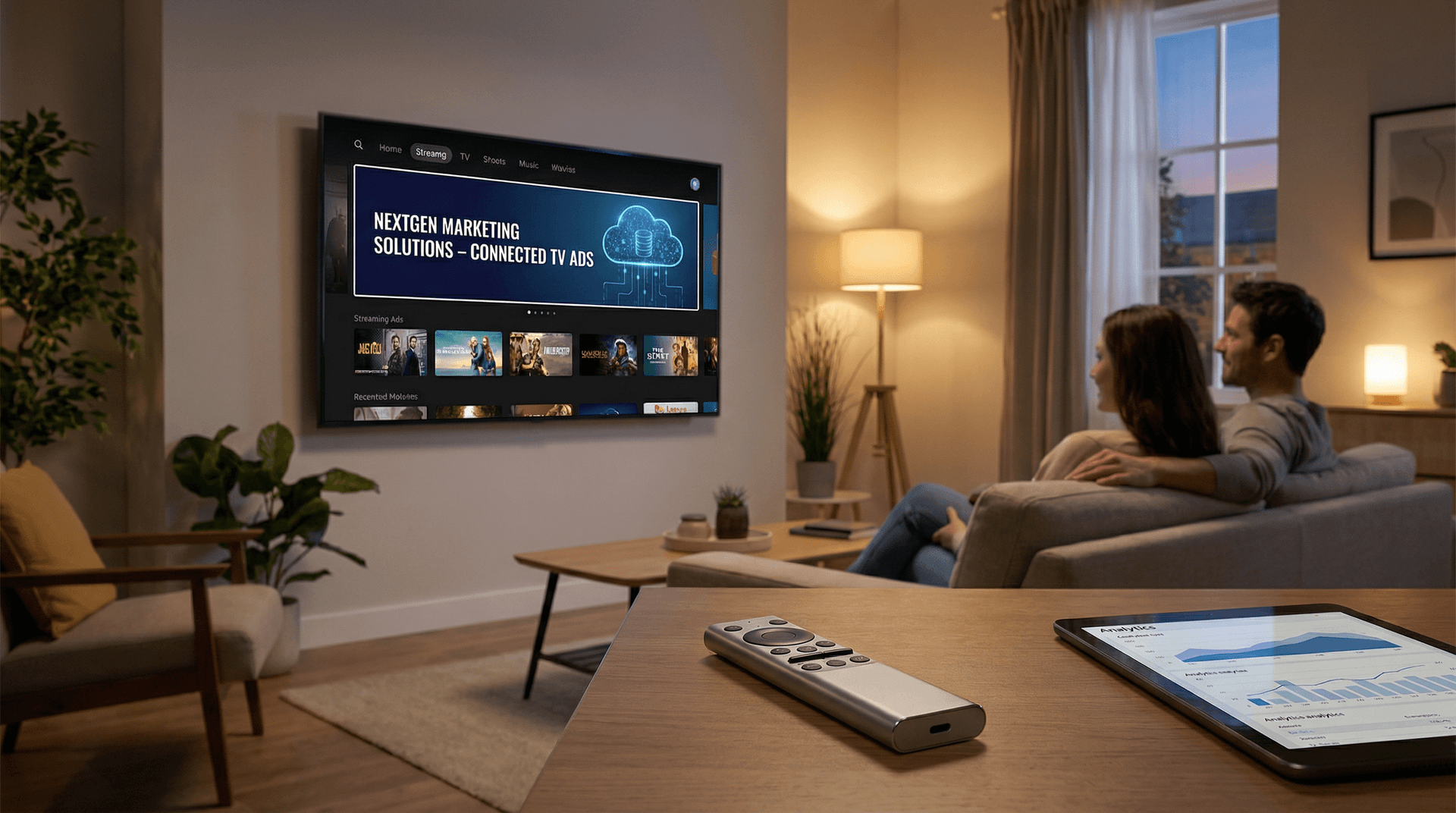
Connected TV Advertising in 2026: The Complete Guide for Digital Marketers
The television landscape has undergone a seismic shift, and by 2026, Connected TV (CTV) is no longer an emerging trend; it is the dominant force in video advertising. The statistics are compelling: CTV ad spend grew a staggering 377% between 2019 and 2025, and streaming now commands 43.8% of all US TV time. This transformation presents an unprecedented opportunity for digital marketers to reach highly engaged audiences with the precision of digital and the immersive impact of traditional television. This guide will delve into the intricacies of CTV advertising in 2026, providing a comprehensive roadmap for leveraging this powerful channel to drive measurable results for your brand.
The Evolution of Television: Why CTV Dominates in 2026
To understand the power of CTV, we must first acknowledge the fundamental changes in how consumers consume video content. The days of linear, scheduled programming as the primary viewing experience are largely behind us. Instead, audiences have embraced on-demand content, personalized experiences, and the flexibility to watch what they want, when they want, and on their preferred device.
Defining Connected TV (CTV)
Connected TV refers to any television set that can connect to the internet and access streaming content. This includes smart TVs with built-in internet capabilities, as well as devices like Roku, Amazon Fire TV, Apple TV, gaming consoles (Xbox, PlayStation), and even Chromecast. The content delivered through these devices comes from Over-The-Top (OTT) services, which bypass traditional cable or satellite providers. Examples include Netflix, Hulu, Disney+, Max, Peacock, YouTube TV, and many more. While the terms CTV and OTT are often used interchangeably in advertising, it is important to remember that OTT refers to the content delivery method, while CTV refers to the device on which that content is consumed.
Audience Migration and Engagement
The shift to CTV is driven by consumer preference. Younger demographics, in particular, have largely abandoned traditional cable, opting for subscription and ad-supported streaming services. However, this migration is not limited to younger viewers; older demographics are also increasingly adopting CTV. This means that advertisers can now reach a broad spectrum of audiences who are actively choosing to engage with content. Unlike traditional linear TV, where viewers might be multitasking or channel surfing, CTV viewers are typically more focused and immersed in their chosen programming, leading to higher ad recall and engagement.
The Data Advantage Over Linear TV
One of the most significant advantages of CTV advertising over traditional linear television is the wealth of data available. Linear TV advertising relies on broad demographic estimates and GRPs (Gross Rating Points). CTV, conversely, offers granular audience insights akin to those found in paid social advertising or paid search campaigns. This data allows for precise targeting, detailed attribution, and real-time optimization, transforming television advertising from a broad-reach branding play into a performance-driven channel. This digital precision, combined with the impact of a full-screen, in-home viewing experience, makes CTV an indispensable component of a modern digital marketing strategy.
Key Advantages of Connected TV Advertising in 2026
The unique blend of digital precision and television impact positions CTV as a powerhouse for advertisers. Understanding its core advantages is crucial for crafting effective campaigns.
Superior Audience Targeting Capabilities
CTV advertising leverages digital data to offer unparalleled targeting. Advertisers can go far beyond basic demographics to reach specific consumer segments. This includes:
- Demographic Targeting: Age, gender, income, household size.
- Geographic Targeting: Country, state, city, zip code, or even hyper-local geo-fencing. This is particularly powerful for local businesses considering programmatic advertising for local businesses.
- Behavioral Targeting: Past viewing habits, online browsing behavior, purchase history, interests, and lifestyle segments.
- Psychographic Targeting: Values, attitudes, personality traits.
- First-Party Data Integration: Uploading your own customer lists (CRM data) for retargeting or lookalike audience creation.
- Third-Party Data: Accessing aggregated data from various providers to identify specific consumer groups.
This level of precision ensures that ad dollars are spent reaching the most relevant audiences, significantly reducing wasted impressions and improving ROI.
Enhanced Measurement and Attribution
Unlike traditional TV, where measuring direct impact was notoriously difficult, CTV offers robust measurement and attribution capabilities. Marketers can track a wide array of metrics, including:
- Impression Volume and Frequency: How many times an ad was shown and to whom.
- Completion Rates: A key metric for video, indicating how many viewers watched the entire ad. CTV completion rates are typically very high (often above 90%) due to the non-skippable nature of many ad formats.
- Website Visits: Tracking post-ad website traffic and engagement.
- App Installs: Measuring direct app downloads driven by CTV campaigns.
- Offline Conversions: Utilizing data clean rooms and partnerships to link CTV ad exposure to in-store purchases or other offline actions.
- Brand Lift Studies: Measuring changes in brand awareness, recall, and perception.
Advanced attribution models can help marketers understand the role CTV plays in the customer journey, from initial awareness to final conversion. This data-driven approach allows for continuous optimization, a hallmark of effective programmatic advertising.
Non-Skippable and High-Impact Ad Formats
The majority of CTV ads are non-skippable, meaning viewers cannot fast-forward or bypass them. This guarantees full ad exposure, a significant advantage over pre-roll ads on other platforms that are often skipped. Furthermore, CTV ads are delivered on a large screen in a lean-back, immersive environment, providing a premium viewing experience. This combination of guaranteed viewership and high-impact presentation leads to greater ad recall, stronger brand messaging, and a more profound emotional connection with the audience. The full-screen, high-definition format is ideal for storytelling and showcasing products or services in an engaging manner, much like traditional television but with digital's targeting prowess.
Crafting a Winning CTV Strategy for 2026
Developing an effective CTV strategy requires careful planning, a deep understanding of your audience, and a commitment to data-driven optimization. Here is a framework for success.
Defining Your Objectives and KPIs
Before launching any campaign, clearly define what you want to achieve. CTV can serve various marketing objectives:
- Brand Awareness: Reaching a broad, relevant audience with your message. KPIs might include impressions, unique reach, and brand lift metrics.
- Consideration/Engagement: Driving interest and encouraging further interaction. KPIs could be website visits, video completion rates, or search queries for your brand.
- Direct Response/Conversion: Driving specific actions like purchases, sign-ups, or app downloads. KPIs include conversions, cost per acquisition (CPA), and return on ad spend (ROAS).
Your objectives will dictate your targeting, creative approach, and measurement framework. For instance, a brand awareness campaign might prioritize reach and frequency, while a direct response campaign will focus on granular conversion tracking and optimization.
Audience Segmentation and Targeting Strategies
Leverage the advanced targeting capabilities of CTV to segment your audience effectively. Consider:
- Demographic and Psychographic Overlays: Combine age, income, and household composition with interests and lifestyle segments to build rich audience profiles.
- Behavioral Data: Target users based on their streaming habits (e.g., genre preferences, specific shows watched), online browsing behavior, or purchase intent signals.
- First-Party Data: Upload your CRM data to retarget existing customers or create lookalike audiences. This is incredibly powerful for nurturing leads or driving repeat purchases.
- Contextual Targeting: Place ads within specific content categories or even individual shows that align with your brand message. For example, a travel brand might target users watching travel documentaries.
- Geo-Targeting: Pinpoint audiences in specific geographic areas, ideal for businesses with physical locations or regionally focused campaigns.
Effective segmentation ensures your message resonates with the right people, at the right time, on the right screen.
Creative Best Practices for CTV
The creative is paramount in CTV. While it shares similarities with traditional TV commercials, there are nuances to consider:
- High Production Quality: CTV viewers expect high-quality content. Your ads should reflect this, with professional videography, sound, and editing.
- Concise Messaging: While ads are non-skippable, attention spans are still limited. Deliver your core message clearly and quickly, especially in the first 5-10 seconds.
- Strong Call to Action (CTA): Even for brand awareness, a clear, memorable CTA is crucial. This could be a website URL, a brand name to search for, or a specific offer. Consider incorporating QR codes for direct response.
- Brand Integration: Ensure your brand is prominently featured throughout the ad, not just at the end.
- Vary Ad Lengths: Experiment with 15, 30, and even 60-second spots to see what performs best for different objectives and audiences. Shorter ads can be effective for frequency, while longer ads allow for more storytelling.
- A/B Testing: Continuously test different creative variations to optimize performance. This could involve different headlines, visuals, CTAs, or even emotional appeals.
For more insights on video strategy, consider our guide on Video Advertising in 2026: YouTube, OTT, Shorts, and the Full-Funnel Strategy That Works.
Platform Selection and Budget Allocation
The CTV ecosystem is fragmented, with numerous platforms and publishers. Key considerations include:
- Direct Buys vs. Programmatic Platforms: You can buy inventory directly from publishers (e.g., Hulu, Roku) or through programmatic platforms (e.g., The Trade Desk, Google Ad Manager). Programmatic offers greater scale, targeting flexibility, and optimization capabilities, making it a preferred choice for many advertisers. Our guide on Programmatic Advertising in 2026: How It Works and Why It Dominates Digital Media provides a deeper dive.
- Ad-Supported Video On Demand (AVOD) vs. Free Ad-Supported Streaming TV (FAST): AVOD services like Hulu or Peacock offer premium content with ad breaks. FAST channels (e.g., Pluto TV, Tubi) mimic linear TV channels but are free and ad-supported. Both offer valuable inventory, but the audience demographics and content types may differ.
- Budgeting: CTV typically requires a higher minimum budget than other digital channels due to its premium inventory and audience. Allocate sufficient budget for testing and scaling. A good starting point is to consider it as a significant portion of your overall display and video advertising budget.
Advanced Tactics and Future Trends in CTV for 2026
As CTV continues to evolve, staying ahead of emerging trends and advanced tactics is crucial for sustained success.
Interactive and Shoppable CTV Ads
The future of CTV advertising is increasingly interactive. Imagine an ad where viewers can use their remote control to:
- Request More Information: Click a button to have a brochure emailed to them.
- Add to Cart: Directly add a featured product to their e-commerce cart.
- Download an App: Scan a QR code or click to initiate an app download.
- Vote in a Poll: Engage with interactive content related to the ad.
These shoppable and interactive formats blur the lines between advertising and direct commerce, offering a seamless path from discovery to purchase. This capability significantly enhances the direct response potential of CTV.
Cross-Device Integration and Sequential Messaging
The power of CTV is amplified when integrated with other digital channels. Cross-device targeting allows you to:
- Retarget CTV Viewers: Serve display or social ads on mobile or desktop to users who have seen your CTV ad.
- Sequential Messaging: Deliver a specific message on CTV, followed by a complementary message on another device (e.g., a brand awareness ad on CTV, followed by a product-specific ad on social media).
- Audience Extension: Use CTV ad exposure data to build lookalike audiences for other platforms.
This holistic approach ensures a consistent brand experience across the customer journey and maximizes the impact of your overall media spend. It is a critical component of a comprehensive programmatic advertising strategy.
Leveraging AI and Machine Learning for Optimization
Artificial intelligence (AI) and machine learning (ML) are transforming every aspect of digital marketing, and CTV is no exception. By 2026, AI will be indispensable for:
- Predictive Analytics: Forecasting audience behavior and campaign performance.
- Dynamic Creative Optimization (DCO): Automatically generating and serving personalized ad creatives based on viewer data.
- Real-Time Bidding (RTB) Optimization: AI algorithms can optimize bids in real-time to achieve desired outcomes at the lowest possible cost.
- Fraud Detection: Identifying and mitigating ad fraud to ensure legitimate impressions.
- Audience Discovery: Uncovering new, high-value audience segments that human analysis might miss.
Agencies like CleverBoss are increasingly leveraging AI consulting to help clients implement these advanced optimization techniques, ensuring maximum efficiency and effectiveness for their CTV campaigns.
Privacy Considerations and Data Clean Rooms
As privacy regulations continue to evolve (e.g., GDPR, CCPA), the use of consumer data in advertising is under increasing scrutiny. In 2026, data clean rooms will become even more critical for CTV advertisers. These secure, privacy-compliant environments allow multiple parties (advertisers, publishers, data providers) to collaborate and analyze aggregated, anonymized data without sharing raw, personally identifiable information. This enables advanced targeting, measurement, and attribution while respecting user privacy. Understanding and adapting to these privacy shifts will be paramount for long-term success in CTV.
Measuring Success and Optimizing Your CTV Campaigns
Effective measurement and continuous optimization are the cornerstones of a successful CTV strategy. Without them, even the most well-planned campaigns can fall short.
Key Performance Indicators (KPIs) for CTV
Beyond the basic metrics, focus on KPIs that directly align with your campaign objectives:
- Video Completion Rate (VCR): For brand awareness, a high VCR indicates strong engagement.
- Unique Reach and Frequency: Ensure you are reaching a sufficient number of unique viewers without over-saturating them with ads.
- Website Traffic & Engagement: Track direct and indirect website visits, bounce rate, pages per session, and time on site from CTV-exposed audiences.
- Conversion Rate & CPA: For direct response campaigns, measure the percentage of viewers who complete a desired action and the cost per acquisition.
- Return on Ad Spend (ROAS): Calculate the revenue generated for every dollar spent on CTV.
- Brand Lift Metrics: Conduct surveys to measure changes in brand awareness, ad recall, message association, and purchase intent among exposed vs. control groups.
- Incremental Reach: How many new, unique viewers did CTV bring that you couldn't reach through other channels?
Attribution Models for CTV
Attribution in a multi-channel world is complex. For CTV, consider:
- View-Through Attribution: Assigning credit to an ad if a user saw it and then converted later, even if they didn't click. This is particularly relevant for CTV's non-clickable format.
- Multi-Touch Attribution (MTA): Models like linear, time decay, or U-shaped attribution distribute credit across all touchpoints in the customer journey, including CTV. This provides a more holistic view of CTV's impact.
- Incrementality Testing: The gold standard for understanding true impact. Run controlled experiments where a segment of your audience is exposed to CTV ads, and a control group is not. Compare the difference in conversions or other KPIs to determine CTV's incremental value.
Understanding which attribution model best suits your business and campaign goals is critical for accurate performance evaluation.
Continuous Optimization Strategies
CTV campaigns are not "set it and forget it." Ongoing optimization is essential:
- A/B Test Creatives: Continuously test different ad variations (e.g., different CTAs, messaging, visuals) to identify what resonates most with your audience.
- Refine Targeting: Based on performance data, adjust your audience segments. Exclude underperforming segments and expand on high-performing ones.
- Optimize Frequency Capping: Find the sweet spot for ad frequency to maximize impact without causing ad fatigue. Too few impressions may not be effective; too many can annoy viewers.
- Adjust Bidding Strategies: If using programmatic, refine your bidding strategies based on real-time performance to optimize for your desired KPIs. This is similar to the advanced techniques used in Google Ads Smart Bidding.
- Analyze Placement Performance: Identify which publishers, apps, or content categories are delivering the best results and allocate more budget to them.
- Cross-Channel Analysis: Look at how CTV impacts performance on other channels. Does it drive more organic search queries? Does it improve the efficiency of your Meta Ads targeting strategies?
By embracing a culture of continuous testing and optimization, you can ensure your CTV campaigns deliver maximum ROI in 2026 and beyond.
Conclusion
Connected TV advertising in 2026 represents a paradigm shift in how brands connect with their audiences. It combines the immersive power of television with the precision, targeting capabilities, and measurable results of digital marketing. The rapid growth in ad spend and viewer adoption underscores its critical role in any comprehensive digital strategy. By understanding its advantages, crafting a data-driven strategy, leveraging advanced tactics like interactivity and AI, and committing to continuous optimization, marketers can unlock unprecedented opportunities for brand growth and measurable conversions. The future of television advertising is here, and it is dynamic, intelligent, and highly effective.
Ready to navigate the complex, yet incredibly rewarding, world of Connected TV advertising? Let CleverBoss be your guide. Our team of experts specializes in developing and executing high-performance CTV campaigns that deliver tangible results. Contact us today to schedule a consultation and discover how we can help your brand dominate the CTV landscape in 2026.