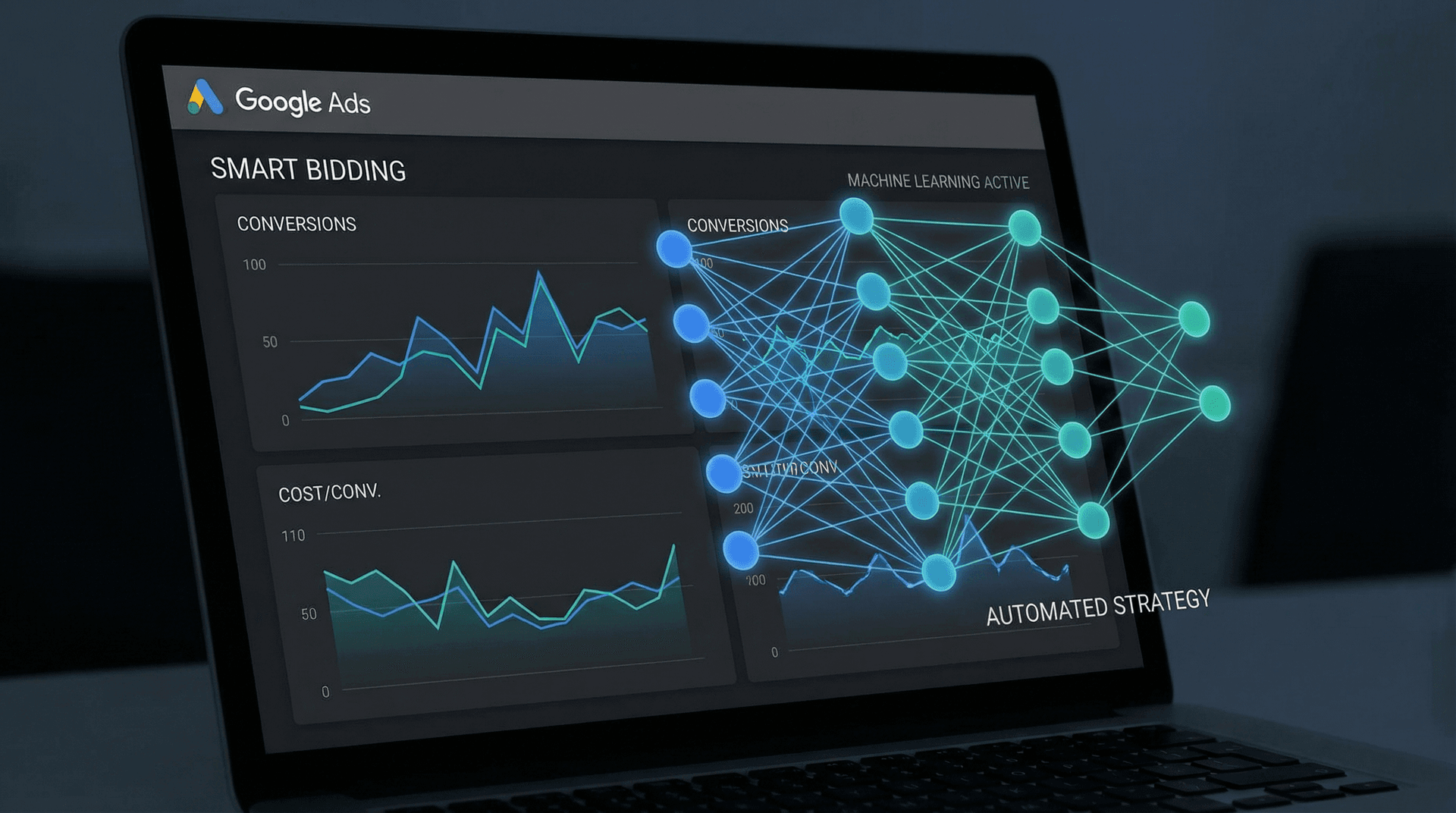
The landscape of paid search advertising is in a constant state of flux, but few areas have evolved as rapidly and profoundly as Google Ads Smart Bidding. What began as a nascent set of automated strategies has matured into a sophisticated, AI-driven powerhouse, fundamentally reshaping how advertisers manage bids and optimize performance. As we look ahead to 2026, the discussion is no longer about if you should use Smart Bidding, but how to master its nuances, leverage its advanced capabilities, and integrate it seamlessly into your overall digital marketing strategy.
This comprehensive guide will dissect the current state of Google Ads Smart Bidding, including the transformative impact of AI Max, the strategic insights offered by Smart Bidding Exploration, and the implications of recent platform changes like the deprecation of call-only ads. We will explore the various Smart Bidding strategies available, provide actionable advice on selecting the right one for your specific goals, and critically examine when a manual approach might still be warranted. Prepare to navigate the complexities of automated bidding with confidence and ensure your campaigns are optimized for peak performance in the years to come.
The Evolution of Smart Bidding: From Basic Automation to AI Max
To truly appreciate the power of Smart Bidding in 2026, it's crucial to understand its journey. Early iterations of automated bidding were often met with skepticism, sometimes rightly so. They lacked the granular control and predictive power that advertisers craved. However, Google's relentless investment in machine learning and artificial intelligence has transformed these strategies into indispensable tools for modern marketers.
The Rise of Machine Learning in Paid Search
At its core, Smart Bidding leverages Google's vast data reservoirs and advanced machine learning algorithms to predict the likelihood of a conversion for every auction. This goes far beyond simple rules-based automation. It considers a multitude of real-time signals, including:
- Device: How does user behavior differ on mobile versus desktop?
- Location: Are users in certain geographic areas more likely to convert?
- Time of day/day of week: When are conversions most probable?
- Operating system: Does a specific OS correlate with higher conversion rates?
- Browser: Are there performance differences across browsers?
- Remarketing list: Is the user part of an audience segment with high intent?
- Ad creative: Which ad variations resonate most effectively?
- Landing page: How does landing page experience impact conversion probability?
- Search query: The specificity and intent behind the user's search.
By analyzing these signals in milliseconds, Smart Bidding can adjust bids in real time for each individual auction, maximizing the chances of achieving your defined performance goals. This level of optimization is simply impossible to replicate manually, especially at scale.
Introducing AI Max: The Next Frontier
While "AI Max" isn't a formally named Google Ads product, it represents the ongoing, accelerated integration of advanced AI and machine learning across all aspects of the platform, particularly within Smart Bidding. This includes:
- Enhanced Predictive Capabilities: AI Max signifies an even deeper understanding of conversion paths, factoring in cross-device journeys, longer attribution windows, and complex user behaviors that precede a final conversion. It's about predicting not just the next click, but the entire customer journey.
- Cross-Campaign and Cross-Channel Learning: Modern AI systems in Google Ads can learn from performance across your entire account, and even potentially across different campaign types (e.g., Search, Display, Video). This holistic view allows for more informed bidding decisions, especially as advertisers embrace programmatic advertising and other integrated strategies.
- Automated Insights and Recommendations: The AI doesn't just bid; it also provides increasingly sophisticated insights into performance drivers and suggests optimizations, helping advertisers understand the "why" behind the "what."
- Adaptability to Market Changes: With the rapid pace of digital marketing, AI Max allows Smart Bidding to quickly adapt to shifts in consumer behavior, competitive landscapes, and even economic conditions, maintaining optimal performance without constant manual intervention.
The core takeaway is that Smart Bidding in 2026 is significantly more intelligent and adaptable than its predecessors. It's less about setting rigid rules and more about guiding a powerful AI towards your business objectives.
Understanding the Core Smart Bidding Strategies in 2026
Google Ads offers a suite of Smart Bidding strategies, each designed to optimize for a specific goal. Choosing the right strategy is paramount to your campaign's success. Here's a breakdown of the key options and their ideal use cases:
1. Target CPA (Cost Per Acquisition)
Goal: Get as many conversions as possible at or below a specific target cost per acquisition.
How it works: You set a desired average CPA, and Google Ads automatically adjusts bids to help you achieve that target. It prioritizes conversions over volume if the CPA cannot be met.
When to use it:
- Your primary goal is to acquire leads or sales within a specific cost constraint.
- You have a consistent conversion volume (ideally 15+ conversions in the last 30 days for Search campaigns) to provide sufficient data for the algorithm.
- You have a clear understanding of your acceptable CPA.
Best practices: Start with a realistic target CPA based on historical data. Be prepared to adjust it as the campaign learns. Avoid making drastic changes too frequently, as this can disrupt the learning phase.
2. Target ROAS (Return On Ad Spend)
Goal: Maximize conversion value while aiming for a specific target return on ad spend.
How it works: You tell Google Ads the average conversion value you want to get for every dollar you spend. For example, a Target ROAS of 300% means you want $3 in conversion value for every $1 spent.
When to use it:
- You're an e-commerce business or have varying conversion values (e.g., different product prices, lead quality scores).
- You are tracking conversion values accurately in Google Ads.
- You have a strong historical conversion volume and value (ideally 30+ conversions with value in the last 30 days for Search).
Best practices: Ensure your conversion tracking accurately reports values. Calculate your target ROAS based on your profit margins and business goals. Like CPA, allow for a learning period and make incremental adjustments.
3. Maximize Conversions
Goal: Get the most conversions possible within your budget.
How it works: Google Ads automatically sets bids to help you get the most conversions for your campaign without exceeding your daily budget. It doesn't aim for a specific CPA, but rather to exhaust your budget efficiently for conversions.
When to use it:
- You have a fixed budget and want to get as many conversions as possible, regardless of the individual CPA (within reason).
- You're launching a new campaign and want to gather conversion data quickly.
- You're less concerned about individual CPA and more about overall conversion volume.
Best practices: Monitor your CPA closely, as it can fluctuate. Ensure your budget is realistic for the conversion volume you expect. Consider transitioning to Target CPA or Target ROAS once sufficient conversion data is accumulated.
4. Maximize Conversion Value
Goal: Get the most conversion value possible within your budget.
How it works: Similar to Maximize Conversions, but it optimizes for the total value of conversions rather than just the number of conversions. It will bid higher for auctions that are more likely to result in high-value conversions.
When to use it:
- You have varying conversion values and want to prioritize higher-value sales or leads.
- You have a fixed budget and want to maximize the revenue generated.
- You have accurate conversion value tracking.
Best practices: This strategy is ideal for e-commerce or businesses with different product/service tiers. Ensure your conversion value tracking is robust. Monitor your ROAS to ensure profitability.
5. Enhanced CPC (ECPC)
Goal: Increase conversions while maintaining manual control over bids.
How it works: ECPC is a hybrid bidding strategy. You set your manual bids, and Google Ads automatically adjusts them up or down (up to a certain percentage) in real time to increase your chances of conversion. It's essentially a "smart layer" on top of manual bidding.
When to use it:
- You prefer to maintain more control over your keyword bids but want the benefit of Google's real-time optimization.
- You have limited conversion data, making full automation strategies less effective.
- You're testing the waters with Smart Bidding or transitioning from purely manual bidding.
Best practices: Regularly review your manual bids. ECPC can be a good stepping stone towards full Smart Bidding strategies. It's less powerful than full automation but offers a safety net.
6. Maximize Clicks
Goal: Get as many clicks as possible within your budget.
How it works: Google Ads automatically sets bids to help you get the most clicks for your campaign without exceeding your daily budget.
When to use it:
- Your primary goal is to drive traffic to your website, perhaps for brand awareness or content consumption, rather than direct conversions.
- You have a new website or campaign and need to build initial traffic.
- You have a limited budget and want to maximize visibility.
Best practices: While useful for traffic, always consider the quality of clicks. Ensure your targeting is still precise to avoid irrelevant traffic. This is generally not recommended for performance-focused campaigns.
7. Target Impression Share
Goal: Show your ads at the top of the page or anywhere on the search results page.
How it works: You set a target impression share percentage (e.g., 80%) and a desired position (anywhere, top, or absolute top), and Google Ads adjusts bids to help you achieve that. You can also set a maximum CPC bid limit.
When to use it:
- You have strong brand awareness goals and want to ensure your ads are consistently visible for specific keywords.
- You're defending your brand terms against competitors.
- You want to dominate a specific segment of search results.
Best practices: Be mindful of the maximum CPC bid limit to control costs. Monitor your actual impression share and adjust the target as needed. This strategy is less about conversions and more about visibility.
The Impact of Recent Google Ads Changes on Smart Bidding
Google Ads is a dynamic platform, and recent updates have further shaped the environment for Smart Bidding. Understanding these changes is crucial for optimizing your campaigns in 2026.
The Deprecation of Call-Only Ads
The phasing out of traditional call-only ads in favor of call campaigns with location assets (or simply call extensions on standard search ads) has a direct impact on how businesses generate phone leads. While not a Smart Bidding strategy itself, it affects the conversion types that Smart Bidding can optimize for.
- Shift to Call Conversions: Advertisers now rely more heavily on tracking call conversions from call extensions or website calls. This means ensuring your call tracking is robust and accurately reporting these conversions back to Google Ads.
- Integrated Optimization: Smart Bidding strategies like Target CPA or Maximize Conversions can now optimize for these call conversions alongside other conversion actions, providing a more holistic view of lead generation.
- Importance of Landing Page Experience: With call extensions, the landing page experience becomes even more critical. A well-optimized landing page that encourages calls can significantly improve the performance of your Smart Bidding strategies. Consider reviewing our guide on 10 Landing Page Elements That Dramatically Increase Conversions.
Enhanced AI and Automation Across the Board
Beyond specific bidding strategies, Google's broader push for AI and automation means that Smart Bidding is constantly learning from more data points and integrating with other automated features. This includes:
- Performance Max Campaigns: While a separate campaign type, Performance Max heavily relies on Smart Bidding principles to optimize across all Google channels (Search, Display, YouTube, Discover, Gmail). Understanding Smart Bidding is foundational to running successful Performance Max campaigns.
- Dynamic Search Ads (DSA): DSA campaigns, which automatically generate ads based on your website content, benefit immensely from Smart Bidding to optimize for conversions from highly relevant, long-tail queries.
- Audience Signals: The quality of your audience signals fed into Smart Bidding (e.g., first-party data, customer match lists) directly impacts its effectiveness. The better the data, the smarter the bids.
When to Stick with Manual Control (and How to Do It Smartly)
Despite the undeniable power of Smart Bidding, there are still scenarios where manual control, or at least a hybrid approach, might be more appropriate. It's not an "either/or" situation, but rather a strategic decision based on your specific circumstances.
Scenarios Favoring Manual Bidding or ECPC
- Very Low Conversion Volume: Smart Bidding algorithms need data to learn. If your campaign generates very few conversions (e.g., less than 15-20 per month for Search), the algorithm may struggle to optimize effectively. In such cases, manual CPC or ECPC can provide more predictable results.
- Highly Niche or Volatile Markets: In extremely niche markets with limited search volume, or in rapidly changing industries where conversion patterns are erratic, manual control allows for quicker, more direct adjustments.
- Strict Budget Constraints at the Keyword Level: If you have very specific budget allocations for individual keywords or ad groups and cannot afford any deviation, manual bidding offers the tightest control.
- Testing and Experimentation: When conducting highly controlled A/B tests on specific keywords or ad copy where you want to isolate variables, manual bidding can ensure bid consistency.
- Brand Defense with Limited Competition: For brand terms where competition is minimal, manual bidding can often secure top positions at a lower cost than an automated strategy that might overbid.
How to Implement Smart Manual Control (with ECPC)
If you opt for manual control, consider these best practices:
- Start with ECPC: As mentioned, ECPC is a great bridge. It allows you to set your base bids while giving Google's AI a limited scope to optimize for conversions. This can provide a performance boost without fully relinquishing control.
- Leverage Bid Modifiers: Manually adjust bids based on device, location, audience, and ad schedule. This offers a layer of "smartness" to your manual strategy.
- Use Search Term Reports Religiously: Continuously analyze search queries to add negative keywords and refine your targeting. This is crucial for reducing wasted ad spend.
- Monitor Performance Metrics Beyond Clicks: Don't just look at CPC. Track conversion rates, CPA, and ROAS closely to understand the true impact of your manual bids.
- Automate Reporting and Alerts: Even with manual bidding, leverage automated reports and alerts to notify you of significant performance shifts, allowing for timely adjustments.
Mastering Smart Bidding Exploration and Experimentation
Google Ads' Smart Bidding Exploration (formerly Experiments) is an invaluable tool for testing and validating Smart Bidding strategies before fully implementing them. It allows you to run controlled experiments, comparing the performance of your current bidding strategy against a new one.
The Power of A/B Testing Your Bidding Strategy
Smart Bidding Exploration lets you:
- Mitigate Risk: Test a new strategy on a portion of your budget and traffic, minimizing the risk to your overall campaign performance.
- Gain Data-Driven Confidence: See concrete performance data (conversions, CPA, ROAS) comparing the old vs. new strategy.
- Optimize Incrementally: Make informed decisions about scaling successful strategies or discarding underperforming ones.
How to Set Up a Smart Bidding Experiment
- Define Your Hypothesis: What do you expect the new bidding strategy to achieve? (e.g., "Switching from Maximize Conversions to Target CPA will reduce our CPA by 15% while maintaining conversion volume.")
- Choose Your Campaign: Select a campaign with sufficient conversion history.
- Navigate to Experiments: In Google Ads, go to "Experiments" in the left-hand navigation.
- Create a New Experiment: Select "Campaign experiment" and then choose "Bid strategy experiment."
- Configure Your Experiment:
- Name: Give it a descriptive name.
- Control vs. Experiment Split: Typically, a 50/50 split is recommended for statistically significant results, but you can adjust.
- Experiment Duration: Run the experiment for at least 3-4 weeks, ideally longer, to account for conversion delays and learning periods.
- Select New Bid Strategy: Choose the Smart Bidding strategy you want to test (e.g., Target CPA).
- Set Target (if applicable): If testing Target CPA or ROAS, set a realistic target.
- Monitor and Analyze: Regularly check the experiment results. Google Ads will highlight statistically significant differences.
- Apply or End: If the experiment is successful, you can apply the new strategy to your original campaign. If not, you can simply end the experiment.
Key Considerations for Smart Bidding Experiments
- Statistical Significance: Don't make decisions based on small differences. Wait for Google Ads to indicate statistical significance.
- Learning Period: Allow time for the new strategy to learn. The first few days or even a week might show volatility.
- External Factors: Be aware of any external factors (promotions, seasonality, competitor activity) that might influence experiment results.
- Budget: Ensure your campaign budget is sufficient to support the experiment and generate enough data.
Integrating Smart Bidding with Your Overall Digital Strategy
Smart Bidding doesn't operate in a vacuum. Its effectiveness is amplified when integrated thoughtfully into your broader digital marketing ecosystem. This holistic approach is what truly drives success in 2026.
The Synergy with Conversion Tracking
The bedrock of effective Smart Bidding is accurate and comprehensive conversion tracking. Without reliable data on what constitutes a valuable action, the AI cannot optimize effectively. This includes:
- Enhanced Conversions: Leverage Enhanced Conversions to improve the accuracy of your conversion measurement, especially in a privacy-first world.
- Offline Conversion Tracking: For businesses with longer sales cycles or offline components, importing offline conversions provides crucial data to the Smart Bidding algorithms.
- Conversion Value Rules: Assign different values to conversions based on factors like location, device, or audience to guide Smart Bidding towards higher-value outcomes.
Data-Driven Audience Signals
Feed your Smart Bidding strategies with high-quality audience data. This means:
- First-Party Data: Utilize your customer match lists, website visitor data, and CRM data to create powerful audience segments.
- Remarketing Lists: Smart Bidding can adjust bids for users on your remarketing lists, knowing they have a higher intent.
- Custom Segments: Create custom segments based on user behavior and interests to provide more granular signals.
The more context and intent signals you provide, the better Smart Bidding can perform. This is particularly relevant as Meta Ads targeting strategies also increasingly rely on robust first-party data.
Ad Creative and Landing Page Optimization
Even the smartest bidding strategy can't compensate for poor ad creative or a subpar landing page. Ensure your ads are compelling and your landing pages are optimized for conversion. Smart Bidding will then be able to capitalize on the traffic it drives.
- Responsive Search Ads (RSAs): Provide a wide variety of headlines and descriptions for RSAs to allow Google's AI to test and serve the most effective combinations.
- A/B Testing Landing Pages: Continuously test different landing page elements to improve conversion rates.
- User Experience (UX): A seamless and intuitive user experience on your landing page directly impacts conversion likelihood, which Smart Bidding will learn and optimize for.
Budget Management and Forecasting
While Smart Bidding automates bids, you still need to manage your budget strategically. Use Google Ads' performance planner and forecasting tools to understand potential outcomes and adjust budgets as needed. Smart Bidding works best when it has a reasonable budget to operate within, allowing it to explore and optimize.
Conclusion
Google Ads Smart Bidding in 2026 is an indispensable tool for any serious digital marketer. With the continuous advancements in AI and machine learning, these strategies offer unparalleled efficiency and optimization capabilities that manual bidding simply cannot match at scale. From Target CPA and ROAS to Maximize Conversions and the strategic use of Smart Bidding Exploration, advertisers have a powerful arsenal to achieve their performance goals.
However, true mastery lies not just in activating a strategy, but in understanding its nuances, providing it with high-quality data through robust conversion tracking and audience signals, and integrating it seamlessly with a holistic digital marketing approach that includes optimized ad creative and landing pages. While there are still specific scenarios where manual control or ECPC might be appropriate, the trend is clear: leaning into Google's AI-driven automation is the path to sustained success in paid search.
By staying informed about platform changes, continuously experimenting, and focusing on the foundational elements of conversion tracking and audience insights, you can harness the full power of Smart Bidding to drive exceptional results for your business in 2026 and beyond. For a deeper dive into optimizing your paid search campaigns, explore our Paid Search Advertising services.
Is your Google Ads account optimized for the future? Are you leveraging the latest Smart Bidding strategies to their full potential? Contact CleverBoss today for a comprehensive audit and discover how our expert team can elevate your paid media performance. Visit our Contact Us page to get started.